|
Matt Winefield was recently interviewed by environmental attorney extraordinaire, Thierry Montoya, about the current state of brownfield redevelopment in California. The interview was recorded for Thierry’s environmental law podcast known as the “Essential Environmental Podcast.” We try to answer the question: Does it remain feasible to invest in brownfield projects given recent regulatory handcuffs imposed by the California EPA, Department of Toxic Substances Control, and State Water Resources Control Board?
Time Stamp - Topic
05:00 - Defining Brownfields 08:00 - Dry Cleaner Environmental Risks 09:10 - Defining a Soil Vapor Attenuation Factor 13:20 - Environmental Justice Considerations 15:00 - Consequences of the CalEPA’s Vapor Intrusion Guidance (VIG) 18:30 - Environmental Regulator Staff Turnover 20:30 - Brownfield Investment Viability when Groundwater is Impacted 22:45 - Leveraging Old Insurance Policies for Current Remediation 25:00 - Brownfield Success Stories 29:00 - Deals Killed Due to CalEPA’s VIG 30:00 - Site Specific Attenuation Factors 30:45 - The CalEPA VIG is an Underground Regulation 36:00 - Taking Legal Action Against CalEPA 37:15 - Incorporating the VIG into Water Code Section 92-49 39:45 - Regulatory Inflexibility for the 0.03 Attenuation Factor 42:50 - How OCHCA is Using the 0.03 Attenuation Factor for Assessments 44:00 - The Courts’ Deference to Environmental Regulators 48:00 - CA Brownfield Investments in Today’s Regulatory Climate 52:10 - Putting Political Pressure on Environmental Regulators 54:50 - Current Assessment and Remediation Grants 56:50 - Environmental Insurance Options  Winefield & Associates is proud to support the 2023 California Land Recycling Conference (CALRC) in Carson, CA from September 26-28. The Conference is hosted by the U.S. EPA Region 9, CA Department of Toxic Substances Control's (DTSC) Office of Brownfields, and the Center for Creative Land Recycling (CCLR). The theme People, Partnerships, Progress will showcase how brownfield reuse can directly address many of the challenges our communities face to build more equitable, sustainable, resilient, and affordable neighborhoods.
Climate change, environmental injustice and inequity, and the affordability crisis impact our day-to-day lives. The California Land Recycling Conference will showcase neighborhood-level solutions to all three of these challenges through the reuse of abandoned or forgotten sites (brownfields) into the homes, businesses, parks, education and healthcare options so urgently needed. Our founder, Matt Winefield, will also showcase how Winefield & Associates is part of the solution by speaking at the 4pm, Wednesday, September 26th Brownfield Developer panel. The Conference offers a robust program focused on timely and trending land reuse topics, including: interagency collaboration, PFAS, historic funding opportunities, placemaking, welcoming young professionals into our industry, and much more. In addition, to maximize engagement opportunities, the Conference brings together community and private sector leaders engaged in the vital work of brownfield cleanup and revitalization, emphasizing the connections between land revitalization, environmental justice, and climate and highlighting available resources to build stronger communities. We are delighted to support the U.S. EPA Region 9 and DTSC and their significant efforts to revitalize complex properties to create vibrant cities, towns, and neighborhoods! Join us at CALRC to engage People in brownfield reuse, develop long lasting Partnerships, and support Progress within communities! Click here to learn more and register today. We hope to see you there. Our very own Matt Winefield was delighted to interview noted financier Gary Mozer, who shared his perspective on the impact of current interest rate fluctuations on real estate investments. Mr. Mozer places approximately $2 billion annually. He discussed interest rate projections, recent bank failures, and how to take advantage of this unusual real estate market. Many thanks to UCLA’s Bruin Professionals and the Real Estate Alumni Group for assistance with this event. REAG / Bruin Professionals Speaker Series: Matt Winefield Interviews Mary Childs of NPR Planet Money1/18/2023
It was a pleasure interviewing NPR Planet Money co-host, Mary Childs. She discussed how Bill Gross, founder of PIMCO, was one of the first to invest in the mortgage-backed industry, thereby helping foster that industry's growth. Ms. Childs was also kind enough to summarize her book, The Bond King: How One Man Made a Market, Built an Empire, and Lost It All. She has written for Barron's, the Financial Times, and Bloomberg News, covering topics from the bond market and real estate to capitalism and equality. Find out more about Mary at: https://www.npr.org/people/787218595/mary-childs Follow Mary on LinkedIn at: https://www.linkedin.com/in/marychilds/ The Sacramento Bee concurs that the vapor intrusion criteria issued by the California EPA is an important topic pertaining to redevelopment of blighted properties throughout the state. The Sacramento Bee published Matt Winefield's OpEd this week, appealing to the California EPA to update their Vapor Intrusion Guidance Document, which has stopped California brownfield redevelopment in its tracks. Click the image below to read the OpEd: 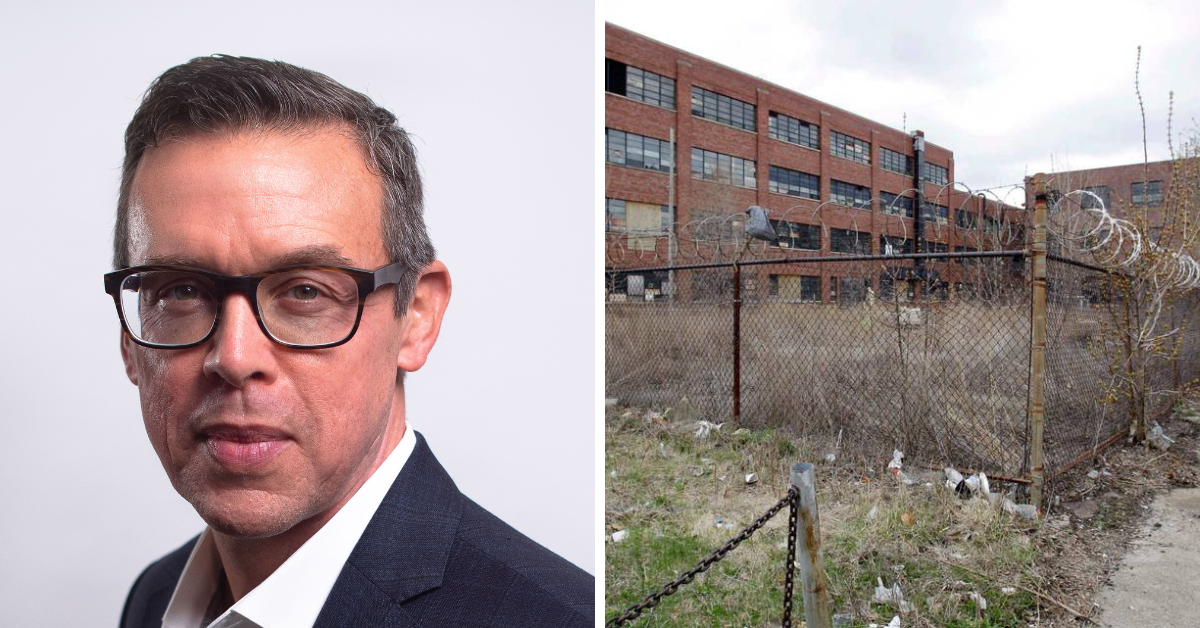 Curious what impact AB-304 is having on California remediation agencies? Matt Winefield and John Van Vlear give a 30-second overview in this video, but for a deeper explanation, click the following link to listen to the full Brownfield Braintrust Podcast episode: https://www.winefieldinc.com/podcasts/brownfield-braintrust-podcast-with-matt-winefield-and-john-van-vlear Our founder, Matt Winefield, moderated a discussion last month with Deborah La Franchi as she detailed how SDS Capital Group has financed over $1 billion for affordable housing. Deborah, a fellow UCLA Bruin alum just like Matt, and her company have developed real-world solutions for rapid and cost-effective housing for the poor. Watch the Zoom session below:  On May 27th, Bruin Professionals (BP) and the Real Estate Alumni Group (REAG) will answer this nagging question: Why does it cost $800,000 per door for publicly financed affordable housing? Deborah La Franchi, Founder & CEO of SDS Capital Group and a proud Bruin, will lead our discussion and provide real world examples of how her firm has benefitted low-income communities (e.g., $200,000 per door). SDS’s $1 billion portfolio of impact investments serves as a testament to the effectiveness of aligning the private sector with key nonprofits, and has been featured in the LA Times, the LA Business Journal, and CoStar. Before SDS, Deborah was Assistant Deputy to the Mayor of Los Angeles. She earned a BA in political science and an MBA from UCLA as well as an MPP from Georgetown University.
We will begin promptly on Friday, May 27th at 11:30 am, and end by 12:30 pm. Time will be set aside for Q&A. Zoom information will be provided prior to the event. Free for UCLA BP and REAG members as well as non members. Click here to RSVP for Private Financing & Construction of Affordable Housing. On February 4, 2022, our very own Matt Winefield had the privilege of moderating a presentation with noted economist Dr. Chris Thornberg, who joined the UCLA Real Estate Alumni Group and Bruin Professionals for an enlightening session that included real estate predictions. He warned that people should be wary of the “narrative” they are hearing, and instead should be driven by data. The entire presentation is provided below, and to download a copy of Dr. Thornberg’s slides, click here:  UCLA Bruin Professionals and the UCLA Real Estate Alumni Group (REAG) are proud to announce that noted economist, Christopher Thornberg, will be presenting at our February 4th Zoom event. His Topic will be “Real Estate Today: What Are the Risks?” Dr. Thornberg is the founding partner of Beacon Economics and Director of the UC Riverside School of Business, Center for Economic Forecasting. A proud Bruin, Dr. Thornberg became nationally known for forecasting the subprime mortgage market crash that began in 2007. He has appeared on CNN and NPR and is regularly quoted in major national dailies including the Wall Street Journal and New York Times.
We will begin promptly on Friday, February 4th at 11:30 am and end by 12:30 pm. Click the link below to register: REAG/BP Real Estate Today: What Are the Risks? (bruinprofessionals.com) |
